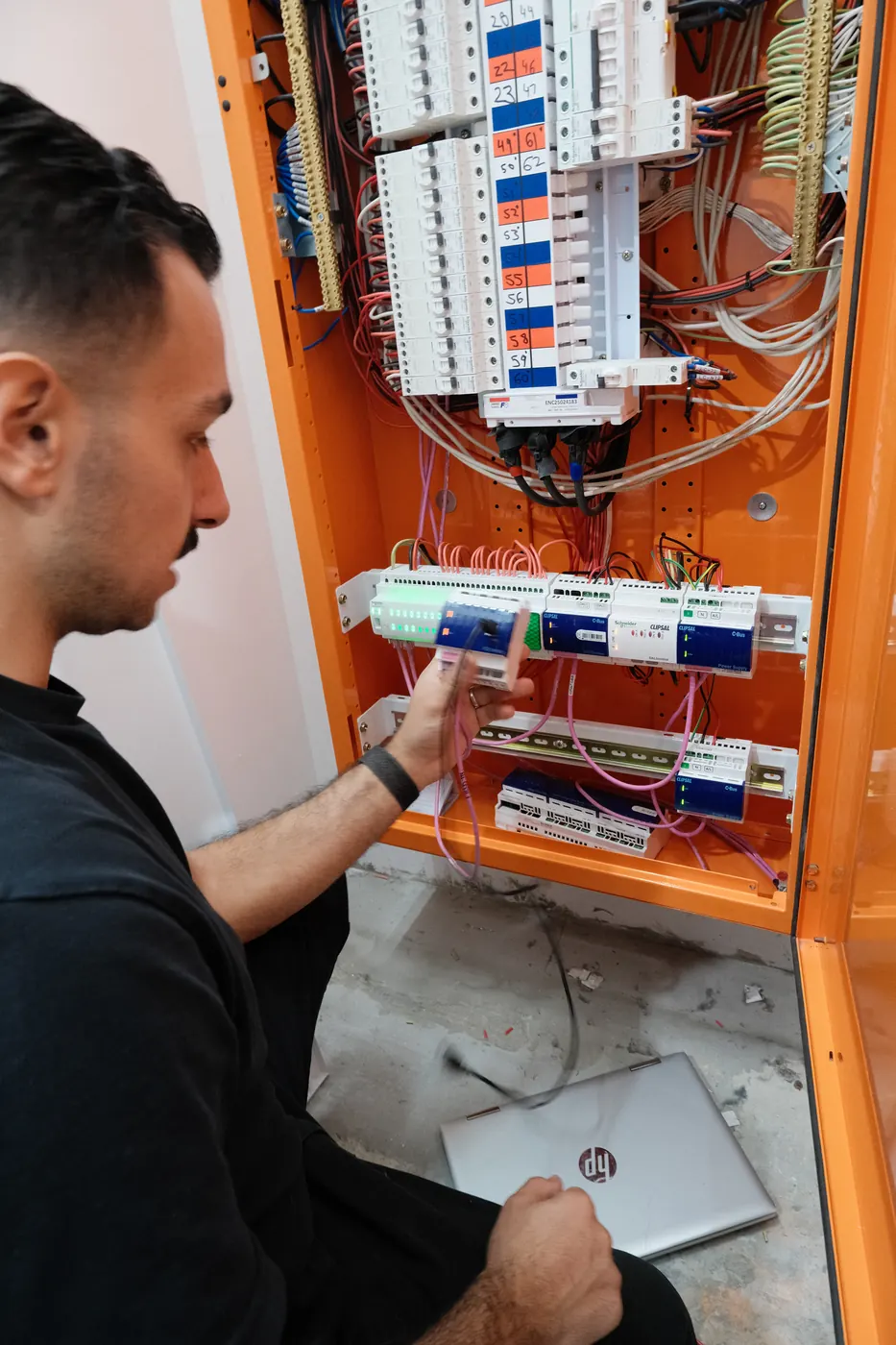
Test and tag, and electrical maintenance
Scheduled testing, asset registers and clear reports for Eastern Suburbs cafés, shops, offices, rental portfolios and strata buildings.
What test and tag covers
Test and tag is the inspection and electrical testing of portable equipment — anything with a plug and a lead. It confirms each item is electrically safe, and the tag records who tested it, when, and when it’s next due.
It applies to workplaces, and how often depends on the environment more than the equipment. The harder a place is on leads and appliances, the more often they need testing:
- Construction and renovation sites — every three months. Leads get driven over, dragged and left in the wet.
- Commercial kitchens, cafés, workshops — typically every six to twelve months, depending on how hard the environment is. Heat, grease and moisture all take a toll.
- Offices, consulting rooms and shops — commonly every five years for equipment that isn’t moved, more often for anything portable.
- Hire equipment — before every hire.
- RCDs have their own schedule: push-button tests plus periodic trip-time testing with an instrument.
Anyone who quotes you one interval without asking what your site is like is guessing.
Strata buildings and common property
The Eastern Suburbs has a lot of strata, from inter-war walk-ups with a handful of units to towers around Bondi Junction. Common property has its own routine: hallway, stairwell and car park lighting, emergency and exit lights, common area power, RCD testing at the common board, and the intercom or door entry system.
Older blocks bring their own issues. Common-property switchboards in many inter-war and postwar buildings are original or close to it, sometimes in a damp basement or a meter room exposed to salt air. Testing often turns up corrosion and missing RCD protection that nobody has looked at in years.
The real difficulty in strata is rarely technical — it’s that nobody owns the problem until something fails, and then it’s urgent. A planned visit agreed with the strata manager, covering testing, lamp replacement and anything outstanding, costs less than a string of emergency call-outs and leaves a paper trail the committee can actually read. We deal directly with strata managers, quote against a defined scope and report per building.
What testing and maintenance costs
Sydney, 2026. Per-item rates fall sharply with volume — on small jobs, attendance is most of the cost.
| The job | Price |
|---|---|
| Test and tag, per itemDepends on volume. Small sites pay more per item because attendance dominates | $3 – $8 each |
| Minimum site attendanceCovers travel and setup for smaller sites | $180 – $350 |
| RCD trip-time testing at the boardInstrument testing, with results recorded per device | $15 – $35 per RCD |
| Emergency and exit light testingSix-monthly and annual discharge testing, per fitting | $12 – $30 each |
| Scheduled maintenance agreementPlanned visits, asset register kept up to date, reporting per site | quoted per site |
These are indicative market ranges for Sydney in 2026, not a quote. What you pay depends on your switchboard, access and what we find. We confirm a fixed price before starting, and it doesn’t move.
How a maintenance schedule works
Site assessment
We walk the site, count the equipment and work out which intervals genuinely apply to it.
Asset register
Every item recorded, so you know what you have and when each one is next due.
Scheduled visits
Booked ahead around trading hours or residents, not sprung on you — including early starts before a café opens.
Reporting
A report after each visit: what passed, what failed, what was taken out of service and why.
Test and tag questions
How often does equipment need testing?
It depends on the environment. Construction sites every three months; commercial kitchens and workshops typically six to twelve; low-risk offices commonly five years for equipment that isn’t moved. We assess your site rather than apply a blanket rule.
Is test and tag a legal requirement?
Workplaces have a duty to make sure electrical equipment is safe. Test and tag is the standard, documented way of meeting that duty, and some industries and sites specifically require it.
Do I need it for my home office?
Not for your own home. The obligations apply to workplaces. If employees work there, that changes things.
How much does test and tag cost?
Typically $3–$8 per item, falling with volume, plus a minimum attendance of $180–$350 for smaller sites. A large site is much cheaper per item than a small one, because attendance is the fixed cost.
Can you work outside business hours?
For most commercial and strata work, yes — it’s often less disruptive, particularly for hospitality and retail. Tell us your constraints and we’ll schedule around them.
Do you look after rental properties or holiday lets?
Yes. Many landlords and agents around the Eastern Suburbs combine a safety switch check, smoke alarm testing and testing of any supplied appliances into one visit per property.
What happens if something fails?
It’s tagged out of service, removed from use and noted in the report with the reason. Where repair makes sense we’ll quote it; where it doesn’t, we’ll say so rather than charge you to fix a $40 lead.
What customers say
Jason solved a really complex problem for our house with excellent professionalism and workmanship. Highly recommend, would def work with him again. On time delivery and within budget.
Reliable and quality service.
Excellent value and service, including follow-up.
These are Google reviews for Cync Electrical & Automation. 5.0 from 20 reviews. — see the profile
Running a business or a strata building?
We’ll assess the site and quote against a real scope. Call 0411 498 916.