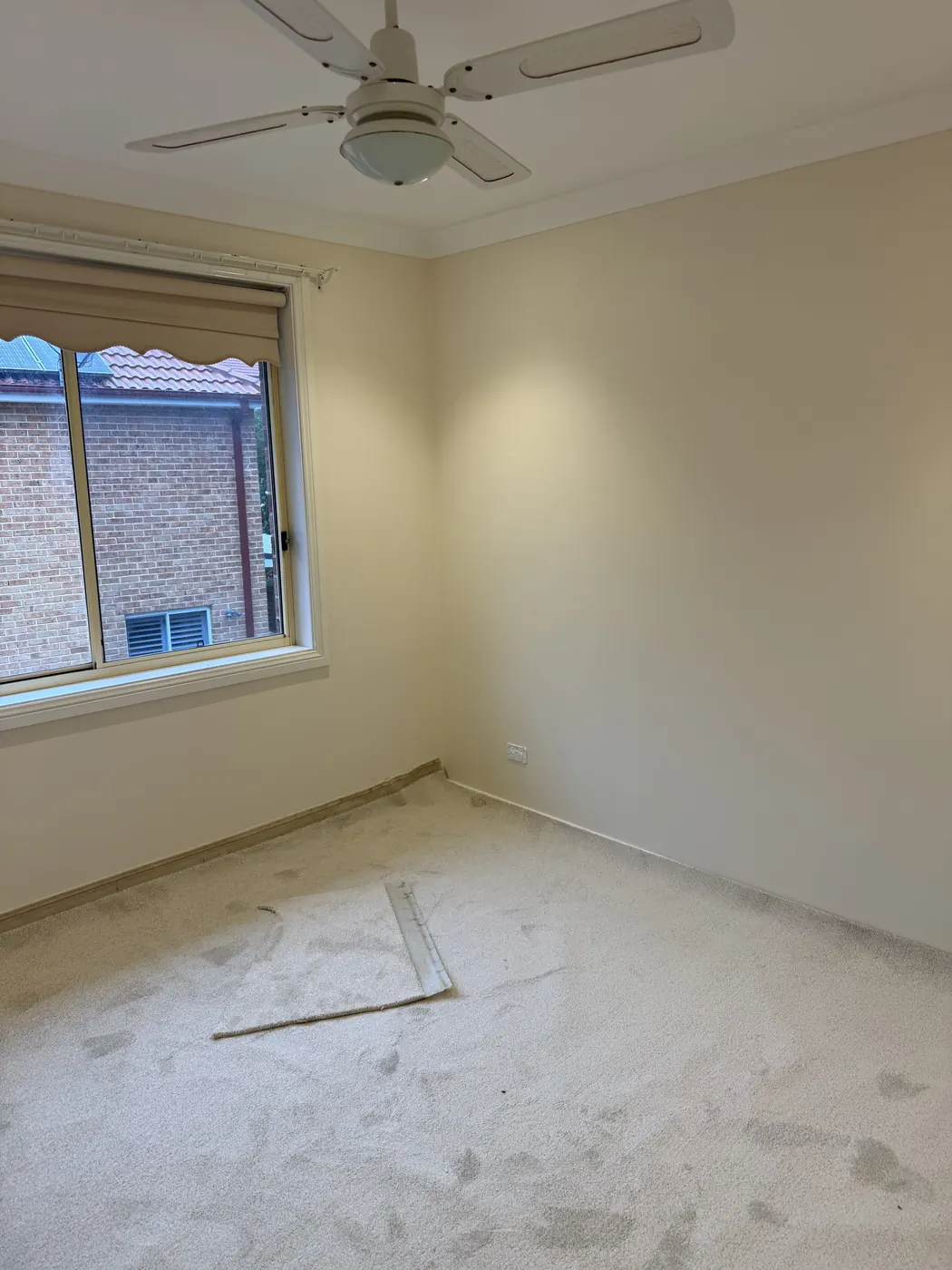
Ceiling fan installation cost in Sydney
Swapping an old ceiling fan for a new one costs $150–$300 in Sydney. Putting a fan where a light fitting hangs now is $250–$450, and a brand-new position with its own cable run is $350–$600.
What a ceiling fan install costs
Sydney, 2026. Labour and fixing materials — the fan itself is extra unless you’d like us to supply it.
| The job | Price |
|---|---|
| Swap an old fan for a new one, same spotExisting wiring, switch and mount are all reused | $150 – $300 |
| Fan in place of an existing lightWe fit a fan-rated mounting block to a joist first | $250 – $450 |
| Fan in a new positionNew cable from the switch, a new switch plate and a rated mount | $350 – $600 |
| Outdoor, balcony or alfresco fanIP-rated unit on an RCD-protected circuit | from $400 |
| Separate wall switching for fan and lightNeeds an extra conductor — far cheaper to decide up front | add $80 – $180 |
| High, raked or decorative ceilingsExtension rod plus a platform or scaffold | add $100 – $250 |
Indicative Sydney ranges for 2026, not a quote. Your price depends on your switchboard, access and what we find once we’re on site. We confirm a fixed price before we start, and it doesn’t move.
What changes the number
Is there a fan there already? Nothing else moves the price as much. Reusing an existing fan’s wiring, switch and mount is a short job; every other scenario adds work.
How we get to the ceiling. A single-level home with a roof space we can walk through is easy. The ground floor of a two-storey terrace has another floor sitting on top of it, so cable has to come up through walls or be fished between joists from below, and that takes longer. Tall Victorian ceilings, raked extensions and stairwell voids need an extension rod and a platform.
What the ceiling is made of. Many inter-war apartment blocks in Bondi, Coogee and Randwick have concrete slab ceilings with no roof space at all. A fan can still go up, but it’s fixed to the slab with anchors rated for the load, and any new cable has to be run neatly on the surface or chased in. In a strata building the slab is often common property, so check your by-laws or ask your strata manager before drilling into it. Ornate plaster ceilings in older terraces need care too — the fixing goes to a joist, not to the decorative work.
The switching you want. Remote-only is the cheapest. Separate wall control for the fan and the light needs one more conductor in the cable, which costs very little while the ceiling is open and a lot more later.
How many fans. Setup and access cost the same for one fan or four, so doing every bedroom in a single visit brings the per-fan price down a long way.
What you should be paying for
- A fan-rated mounting block fixed to the structure. A light fitting just hangs there; a fan vibrates and pulls on its fixing every minute it runs. A plasterboard anchor or the old light’s fixing isn’t good enough, and this is the step cheap installs leave out.
- Blades at a safe height. Australian requirements set a minimum height above the floor and clearances to walls. A low fan in a bedroom with a bunk or a tall wardrobe is a real hazard.
- A look at the lighting circuit first. Adding a fan to a circuit already crowded with downlights is a common cause of nuisance tripping.
- Balancing and a test run. Most wobbly fans aren’t faulty, just unbalanced — something that takes a few minutes to sort on the day.
- The old fitting taken away, the ceiling left clean and any redundant cable made safe.
Ceiling fan cost questions
What does ceiling fan installation cost in Sydney?
Expect $150–$300 to replace an existing fan, $250–$450 to swap a light for a fan, and $350–$600 for a new position that needs a cable run. Outdoor-rated fans start from about $400.
Is it cheaper to put in several fans at once?
Yes. Getting into the ceiling and setting up costs the same whether it’s one fan or four, so each fan after the first is noticeably cheaper. If you’re planning fans for every bedroom, book them together.
Is the fan included in the price?
No — the figures above cover installation. Most people choose their own fan, but we can supply one if you’d prefer.
Why does a new position cost so much more than a swap?
Because it’s a bigger job. A swap reuses the wiring, switch and mount that are already there. A new position needs a cable from a switch, a new switch plate, access to the ceiling and a rated mount.
Can a fan go on a concrete apartment ceiling?
Usually, yes. It’s fixed to the slab with anchors rated for a fan, and the cable is run on the surface or chased in where that’s allowed. In strata buildings the slab is often common property, so check with your strata manager first.
Can I put up a ceiling fan myself?
No. Connecting a fan to fixed wiring is electrical installation work, and in NSW it has to be done by an electrician who holds an electrical licence. A badly fixed fan spinning over a bed is also the wrong place to save a couple of hundred dollars.
Do DC fans cost more to install?
No, installation is the same. DC fans cost more to buy, but they use around 60–70% less power and run more quietly.
How long does it take?
Roughly an hour for a straight swap. Allow up to half a day for a new position, depending on how easy the ceiling is to get into.
Does a ceiling fan need its own circuit?
Almost never — fans draw very little. The exception is a lighting circuit that’s already carrying a lot of downlights, which we check before adding to it.
What customers say
Fantastic service! Friendly, efficient and well priced. Highly recommend. Thank you for swiftly fixing our switches.
Jason was great! One call and less than an hour later, he was here to save the day. Five stars for the prompt and reliable service.
Excellent value and service, including follow-up.
These are Google reviews for Cync Electrical & Automation. 5.0 from 20 reviews. — see the profile
Want a fixed price for your fans?
Tell us how many, which rooms, and whether each one replaces a fan, a light or nothing at all. Call 0411 498 916.