House rewiring and renovation electrical
An old house doesn’t automatically need rewiring. The ones that do usually give themselves away — and it’s worth knowing which kind you’re living in.
How to tell what’s in your walls
Cable is dated by its insulation, and each generation fails in its own way.
Rubber-insulated (VIR), before about 1960. Rubber perishes: it hardens, turns brittle, cracks and eventually falls away, leaving bare copper in walls and ceilings. This is the one that genuinely needs replacing, and it can’t be repaired. Find it in one room and it’s almost always throughout.
Cloth-covered, 1950s–60s. Much the same story, often with rubber under the cloth.
Early PVC and black rubber TPS, 1960s–70s. An improvement, but early formulations go brittle with heat — and roof spaces get very hot in a Sydney summer. Cable that’s fine inside a wall can be crumbling in the ceiling above it.
Modern PVC TPS, 1980s onward. Generally sound. Homes from this era usually need more circuits and a better board, not new cable.
Around the Eastern Suburbs, the older cable turns up most in Victorian and Federation terraces and in inter-war blocks of flats, many of which have been partly rewired over the decades — so one room can be modern and the next original. Postwar brick homes are more often a switchboard-and-circuits job than a full rewire.
Full rewire, partial, or staged?
A full rewire replaces every circuit. It’s disruptive: we need access to walls and ceilings throughout, and there’s patching afterwards.
A partial rewire replaces only what has actually deteriorated — very often the lighting circuits in the roof where heat has done the damage — and leaves sound circuits alone. In plenty of homes, that’s the honest answer, for a fraction of the cost.
Staging matters if you’re living there. We can work area by area — bedrooms, then living spaces, then the kitchen — so part of the house always works. It costs a little more in total and is usually worth it.
The building type shapes the method. In a terrace, there’s rarely access between floors, internal walls are often solid brick, and lath-and-plaster cracks if you look at it wrong, so we plan routes through the subfloor, the roof and existing cavities before touching a wall. In an apartment, anything that cuts into the slab or a shared wall is common property and usually needs owners corporation approval, so we design routes that avoid it where possible and help with the paperwork where we can’t.
The best time to rewire is during a renovation, with the walls already open. If you’re renovating a significant part of an older home, have the wiring checked before the plasterer arrives — it’s the cheapest rewire you’ll ever be offered.
What rewiring costs
Sydney, 2026. Access is the biggest variable — a single-storey house with a walkable roof is a very different job from a two-storey terrace with none.
| The job | Price |
|---|---|
| Lighting circuits only (partial rewire)Usually where heat in the roof has cooked the old cable | $3,500 – $8,000 |
| Whole home, 2 bedroomsNew switchboard included. Most apartments sit in this band | $8,000 – $14,000 |
| Whole home, 3–4 bedroom single levelA freestanding house with workable roof access | $12,000 – $22,000 |
| Whole home, two levels or hard accessMost two-storey terraces — no way between floors, so some walls get opened | $18,000 – $35,000 |
| Rough-in during a renovationPer room with the walls already open — by far the cheapest way | $1,200 – $3,000 / room |
| Inspection and written wiring reportKnow what you have before you spend anything on it | $350 – $650 |
These are indicative market ranges for Sydney in 2026, not a quote. What you pay depends on your switchboard, access and what we find. We confirm a fixed price before starting, and it doesn’t move.
Start with an inspection, not a quote
Inspection and testing
We identify the cable where we can reach it, run insulation resistance tests, and check the board and earthing.
A written report
Photos and plain language: which circuits have failed, which are fine, and what genuinely needs replacing.
We lay out the options
Full, partial or staged, each with a fixed price, so the decision is yours rather than ours.
Stages if you’re living there
Area by area, so part of the home always works.
Rough-in on site
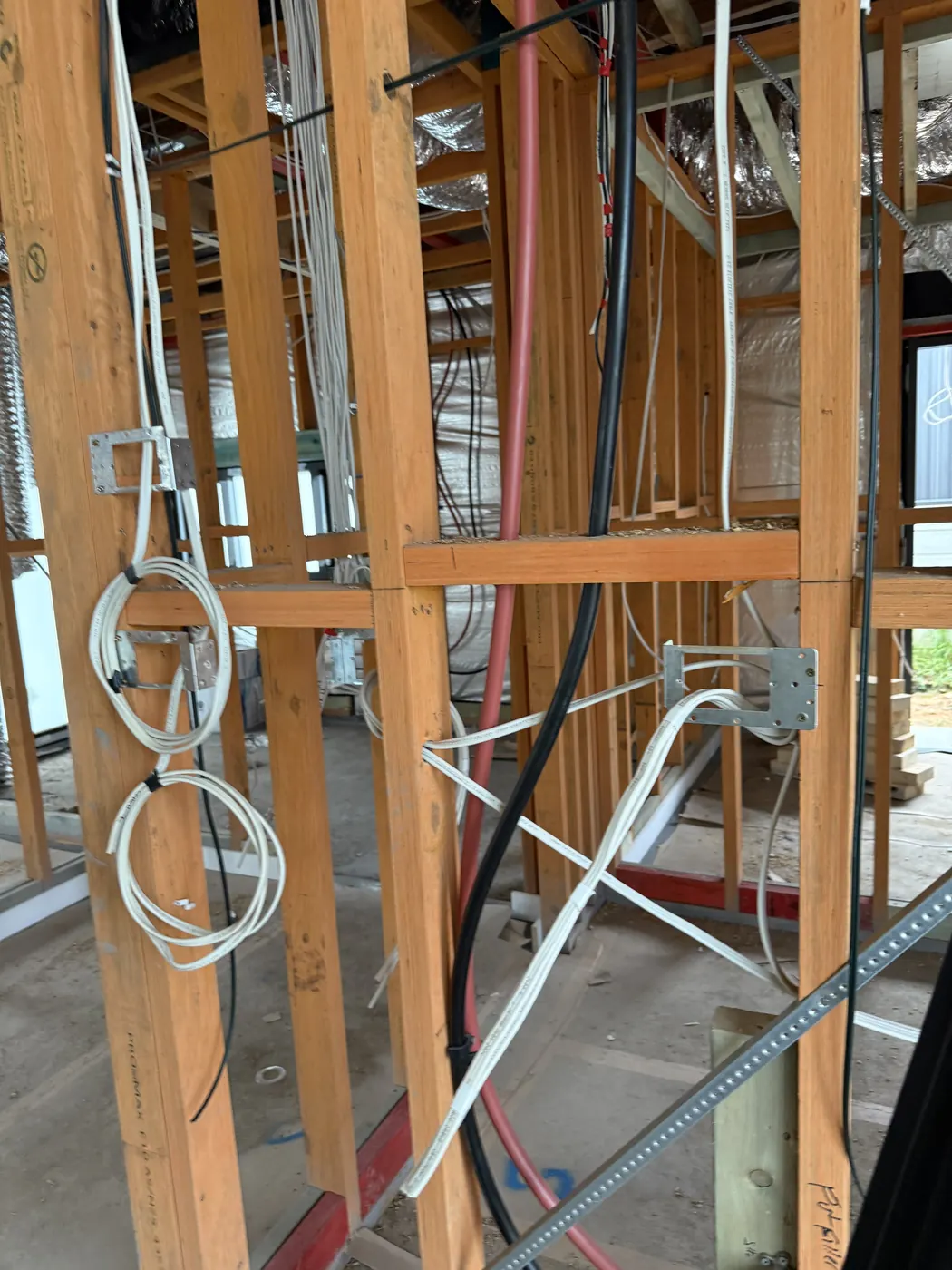
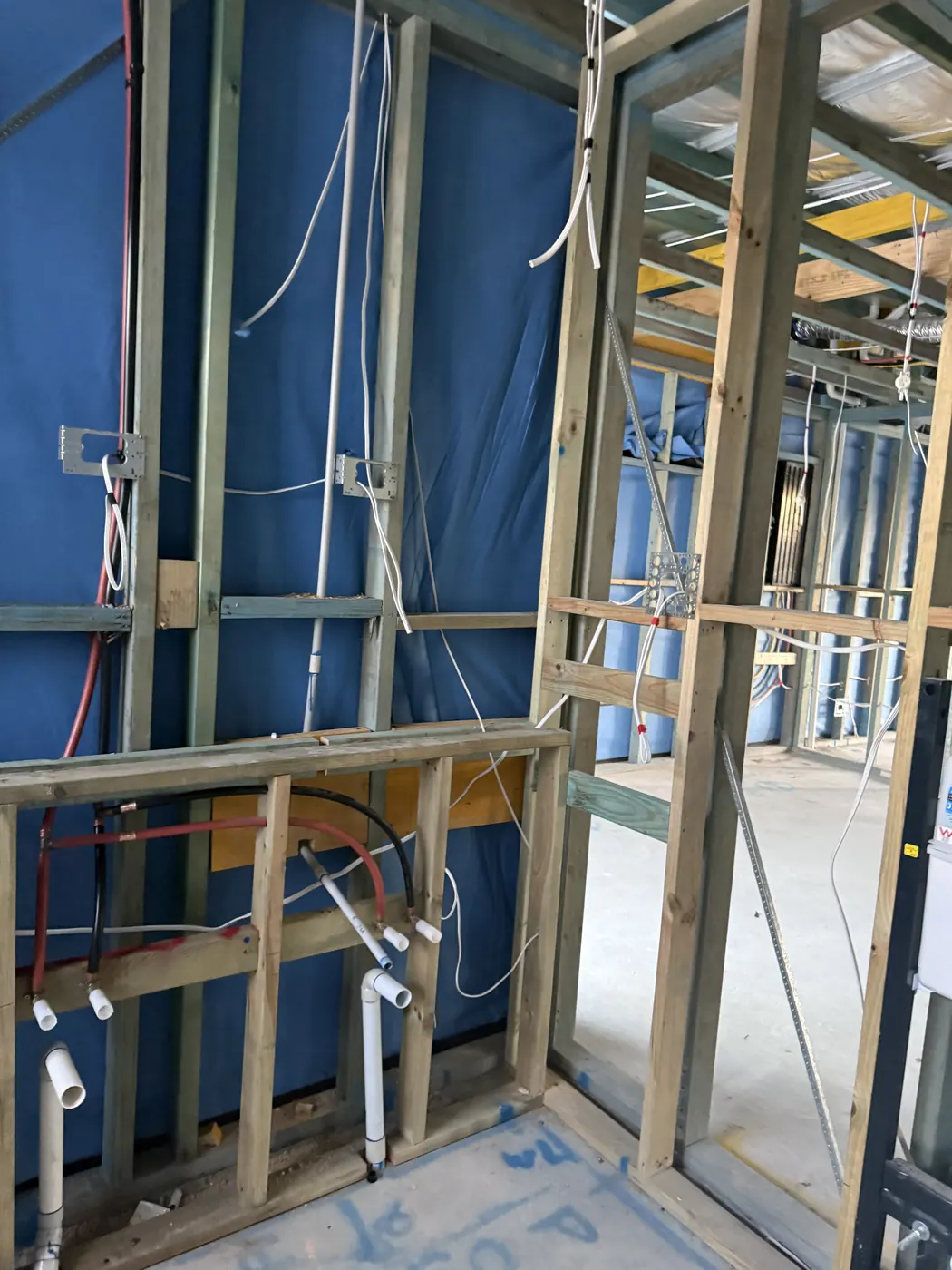
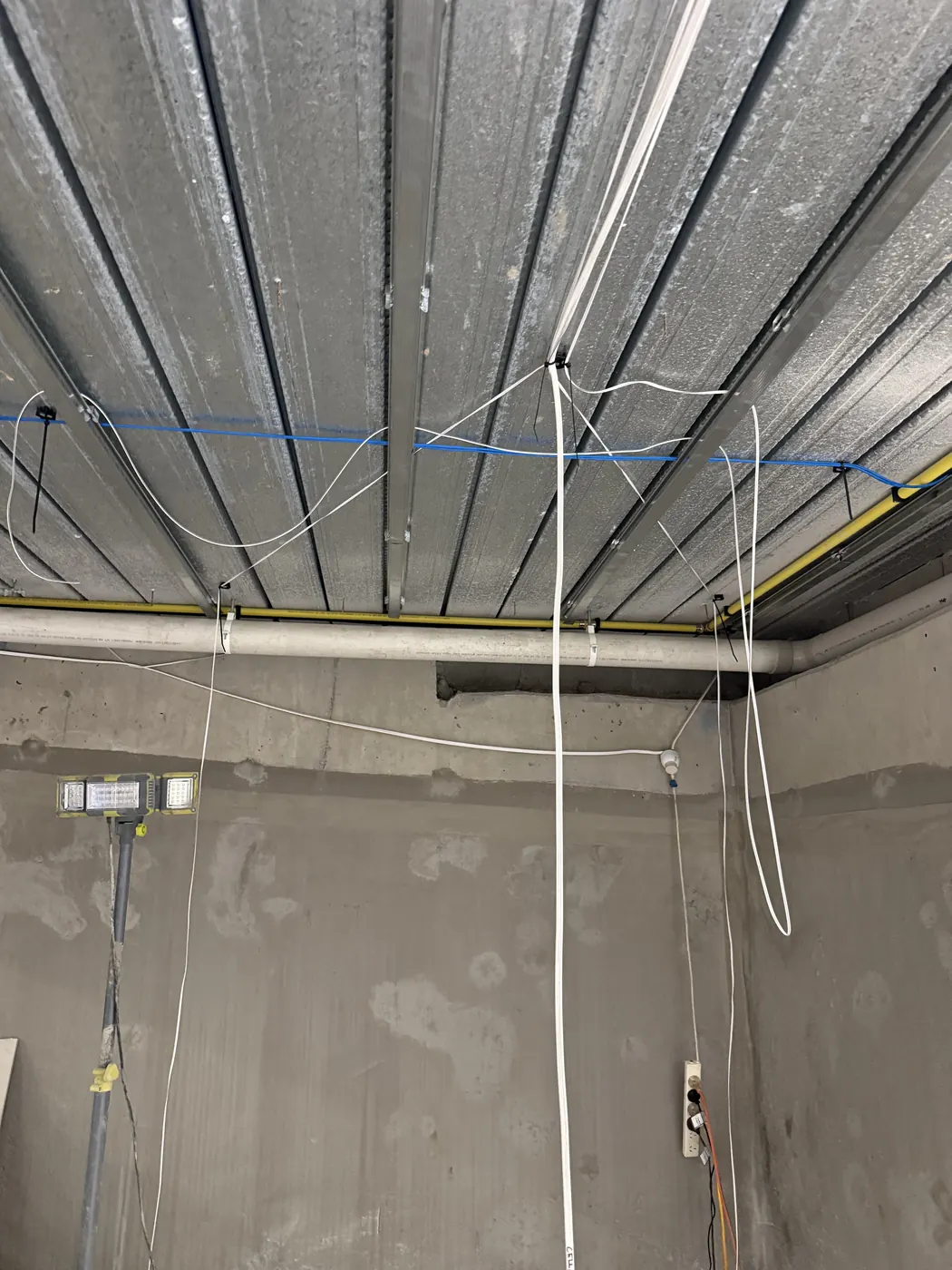
Ceiling and lighting cables roughed in before the plasterboard goes up.
Rewiring questions
What does it cost to rewire a house in Sydney?
A single-level 3–4 bedroom house is typically $12,000–$22,000 with a new switchboard. Two-storey and awkward-access homes — most two-storey terraces among them — are more like $18,000–$35,000. Replacing only the failed circuits can come in at $3,500–$8,000. The cost guide has the full breakdown.
How do I know if my home needs rewiring?
Look at the cable, not the age of the house. Rubber or cloth insulation, mostly from before 1960, has to go — it perishes and can’t be fixed. Early black TPS in a hot roof may need replacing in parts. Modern grey or white PVC is normally fine.
Can you rewire a terrace without wrecking the plaster?
Mostly. We use the subfloor, the roof and existing cavities wherever they exist, and keep openings to the minimum needed. Some patching is unavoidable in a two-storey terrace, and we’ll show you where before starting.
Do I need strata approval to rewire my apartment?
Rewiring inside your unit is usually yours to do, but anything that penetrates the slab, a shared wall or other common property generally needs owners corporation approval. We plan around that and give you the detail your strata manager will ask for.
Can we stay in the house during a rewire?
In most cases, yes — we stage it room by room so you always have somewhere with lights and power. It costs a little more overall and it’s usually the right call.
Does a rewire include a new switchboard?
Our prices include one. New cable feeding an old board with no safety switches would mean paying for most of the job and skipping the part that protects people.
Is a partial rewire a false economy?
Not when the testing supports it. Heat-damaged lighting cable in the roof and sound PVC in the walls is a common combination, and replacing just the failed part is the fair recommendation. We test first instead of quoting a full rewire by reflex.
What customers say
Jason solved a really complex problem for our house with excellent professionalism and workmanship. Highly recommend, would def work with him again. On time delivery and within budget.
Jason onsite quickly and completed the work on the spot, giving us a good price and was very polite. Would highly recommend.
Fantastic service! Friendly, efficient and well priced. Highly recommend. Thank you for swiftly fixing our switches.
These are Google reviews for Cync Electrical & Automation. 5.0 from 20 reviews. — see the profile
Rough-in and rewiring
Wondering what’s in your walls?
Start with an inspection rather than a quote. Call 0411 498 916.