Whole-house surge protection
Solar inverters, EV chargers, C-Bus and smart appliances are all hardwired, all expensive — and a powerboard protects none of them.
Surges in the city are smaller, more frequent and still expensive
When people think of surges they picture lightning. Sydney’s summer storms do roll across the coast, and a nearby strike can induce a spike on the network. But in a dense area like the Eastern Suburbs, most transients come from everyday sources: the network switching, power coming back on after an outage or maintenance, and large motors starting and stopping — lift motors, pumps and building plant in the apartment block you live in or the one next door. They arrive constantly, and each one takes a small bite out of the electronics in your home.
What fails, roughly in the order we see it:
- Automation and lighting control. C-Bus and other control systems are common in harbourside homes. Individual units are small, but together they’re worth a fortune — and older modules may no longer be made.
- Solar inverters. Expensive, and connected to both the grid and a rooftop array of cabling.
- EV chargers. Hardwired, costly, and increasingly common in garages and shared car parks.
- Appliance control boards. The dishwasher motor is fine; the board isn’t, and it often costs more than the appliance is worth.
- Intercoms, gate motors, networking gear, pool controllers and alarms.
Add up what’s hardwired in your home. It’s often a five-figure sum. Protection at the board costs a few hundred.
Type 1, 2 and 3 — what the numbers mean
Type 1 is for installations exposed to direct strike risk, usually where an external lightning protection system is fitted. Unusual in homes.
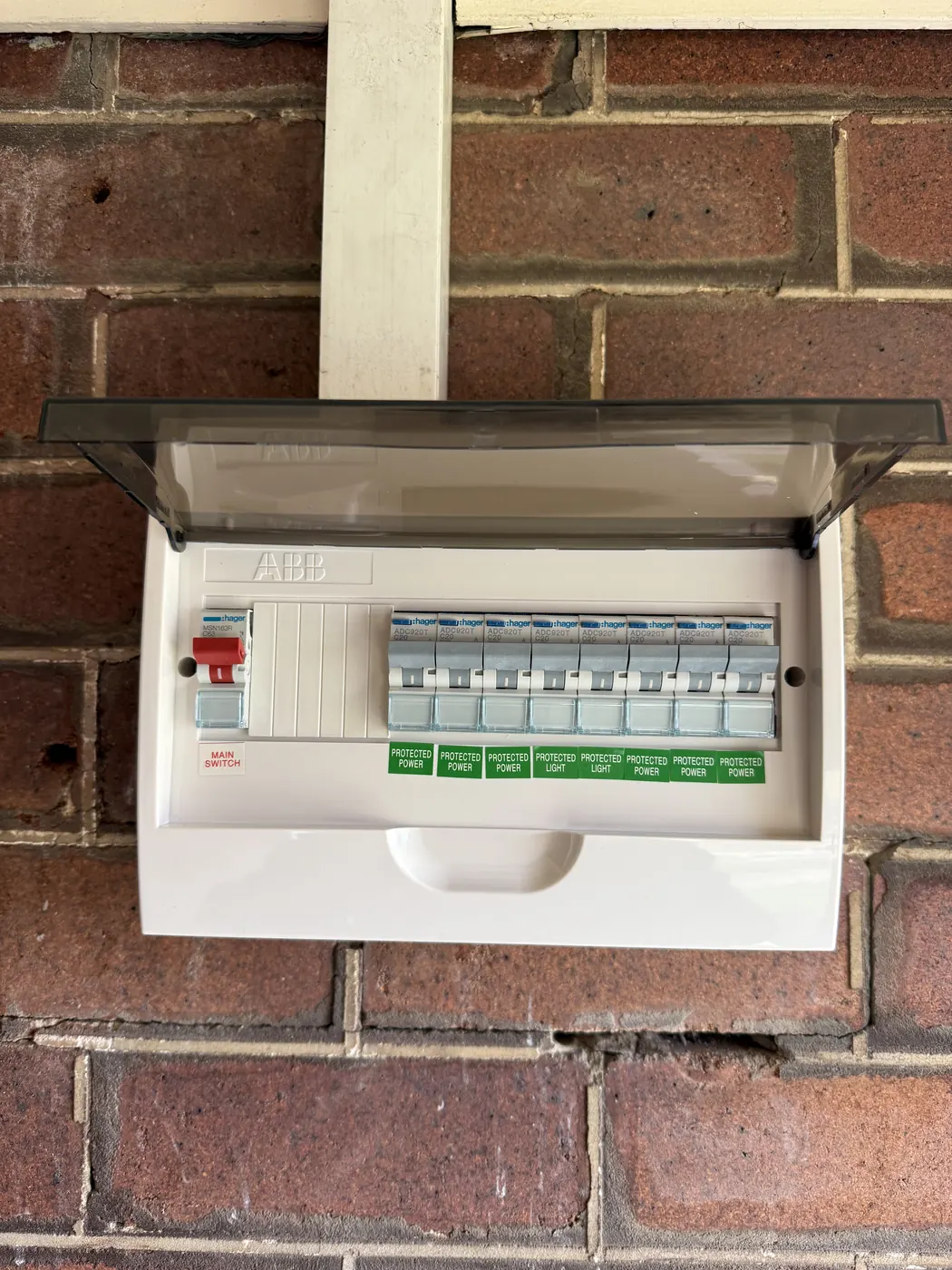
Type 2 is the main one for houses and apartments. Fitted at the switchboard, it clamps transients arriving on the incoming supply before they reach anything else. This is what “whole-house surge protection” means.
Type 3 is point-of-use — the surge powerboard behind the TV. Useful as a last layer but not enough on its own, because it only protects what’s plugged into it. It does nothing for hardwired gear like your inverter, oven, intercom, gate motor or EV charger.
The sensible setup is Type 2 at the board plus Type 3 for anything irreplaceable. In an apartment, Type 2 goes on your own lot board and protects your unit; protection at the building’s main switchboard is a matter for the owners corporation, and worth raising if your building has lifts and plant.
What surge protection costs
Sydney, 2026. Usually fitted during other switchboard work, which costs less than a dedicated visit.
| The job | Price |
|---|---|
| Type 2 surge protection fitted at the switchboardWhere the board has room and a suitable arrangement | $300 – $700 |
| Fitted during a switchboard upgradeThe extra cost while the board is already open — by far the cheapest time | add $250 – $500 |
| Surge protection for a solar or hybrid inverterDC-side protection as well as AC. Worth it given what an inverter costs | $400 – $900 |
| Board with no spare capacityThe board needs to be dealt with first | see switchboard upgrades |
These are indicative market ranges for Sydney in 2026, not a quote. What you pay depends on your switchboard, access and what we find. We confirm a fixed price before starting, and it doesn’t move.
Surge protection questions
Is whole-house surge protection worth it?
Weigh the cost against what’s hardwired in your home. With solar, an EV charger, C-Bus or other automation, or ducted air, you’re protecting thousands of dollars of equipment for a few hundred.
I live in an apartment. Do I need it?
It’s worth considering if you have expensive hardwired equipment — an EV charger, automation, a high-end kitchen. A Type 2 device goes on your own lot board. It won’t replace protection at the building’s main board, which is the owners corporation’s responsibility.
Doesn’t my surge powerboard already protect things?
Only what’s plugged into it, and only partly. It does nothing for your inverter, EV charger, oven, ducted air, intercom, gate motor or lighting control — all hardwired, and all expensive.
Will surge protection stop lightning damage?
It handles the induced transients behind most surge damage. A direct strike on your own building is a different matter, and no domestic device can honestly promise protection from that.
How long does a surge protector last?
They wear as they absorb events, which is why good units have a status indicator. Worth a glance whenever the board is open, and worth replacing once the indicator shows it’s spent.
Does home insurance cover surge damage?
Often, but usually with an excess per claim and sometimes with conditions. A couple of claims will typically cost more than protection would have — and insurance can’t replace automation modules that are no longer made.
Can it be added to my existing switchboard?
Usually, if there’s space and a suitable arrangement. If the board is full or has no RCD protection, that’s a bigger job, and fitting surge protection during the upgrade is the cheapest way to get both.
What customers say
Jason onsite quickly and completed the work on the spot, giving us a good price and was very polite. Would highly recommend.
Jason solved a really complex problem for our house with excellent professionalism and workmanship. Highly recommend, would def work with him again. On time delivery and within budget.
Fantastic service! Friendly, efficient and well priced. Highly recommend. Thank you for swiftly fixing our switches.
These are Google reviews for Cync Electrical & Automation. 5.0 from 20 reviews. — see the profile
Got solar, an EV charger or C-Bus?
That’s the case for protecting the board. Call 0411 498 916 and we’ll tell you what’s involved.