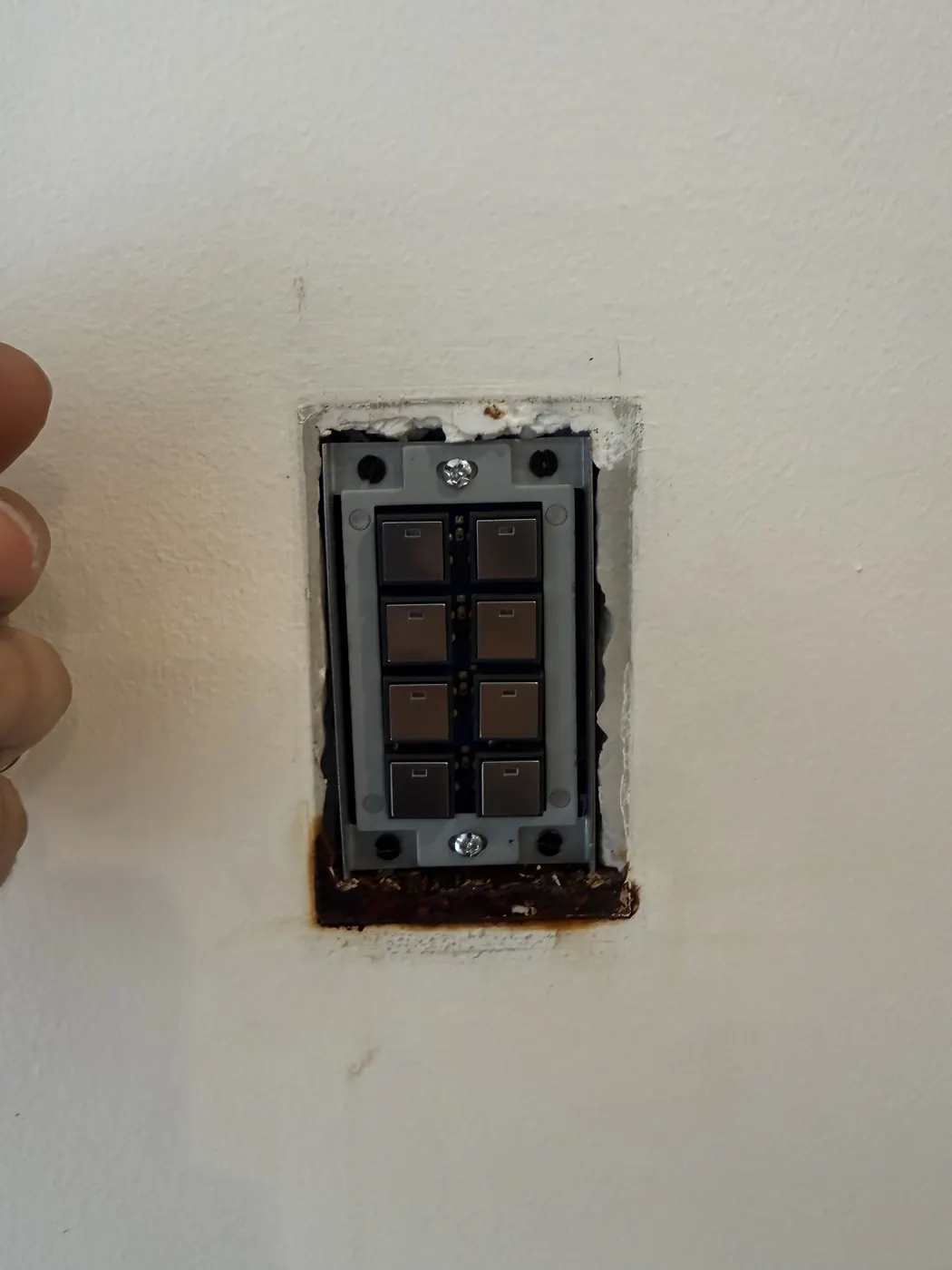
Home automation and smart switching
Automation is where Cync started. From a few smart switches in a flat to a whole harbourside house on C-Bus, we do the wiring and the programming.
What a smart home comes down to
Smart home advertising is all about apps. Whether any of it works day to day is decided underneath, by the switches, the circuits and the neutrals.
The most common snag in an existing home is no neutral at the switch. Traditional Australian wiring often brings only the active down to the switch and runs the neutral straight to the light, so the switch box has no neutral. Most smart switches need one to power themselves — which is why people buy a box of them, take a wall plate off and find they don’t fit.
There are ways around it: battery-powered wireless switches, smart relays fitted at the light instead of the wall, or running a neutral where access allows. In a terrace with solid brick walls, or an apartment with a slab ceiling, which option works depends heavily on the building — so it’s worth sorting out before you buy anything.
The other question is what happens when the internet drops or a manufacturer retires its cloud service. Systems that run locally — a smart switch that still works as a switch, a hub on your own network — age far better than anything that depends on someone else’s server.
What we do
Smart switches & dimming
Fitted properly, with the neutral problem solved rather than worked around.
C-Bus repairs & reprogramming
Fault finding, programming and upgrades — our original specialty.
Apple Home & Google Home
Setups that keep working when the internet doesn’t.
Smart relays & circuits
Control at the fitting or the board when switch positions won’t allow it.
Gates, intercoms & sensors
Entry, motion and gate integration.
Camera integration
Cameras that show up where you already look.
Renovating? Decide now
Adding automation to a finished home is a string of compromises. Building it into a renovation costs very little.
Worth putting in while the walls are open, even if nothing smart gets fitted for years:
- A neutral at every switch position. Cheap now, close to impossible later, and it keeps every smart switch on the market available to you.
- Data cabling to the important spots — hubs, access points, TV positions. Wireless is a fallback, not a plan.
- Deeper switch boxes, because smart switches are bulkier than the ones they replace.
- Conduit to the front door, the gate and any blinds, so cameras, intercoms and motorised blinds become a choice later rather than a renovation.
In an apartment with concrete ceilings, conduit has to go in before the bulkheads and false ceilings close up — there’s no roof space to come back through. None of this commits you to a system or a brand. It just keeps the options open.
Running C-Bus, Wiser, iControl or Dynalite?
That’s our specialty.
A lot of larger Eastern Suburbs homes — around Vaucluse, Bellevue Hill, Point Piper and Darling Point especially — were fitted with commercial-grade lighting control during builds and renovations over the past two decades. Those systems are programmed, not just wired. When one starts misbehaving, an electrician can test the cable but usually can’t read the programming, so the same fault gets fixed several times and keeps returning.
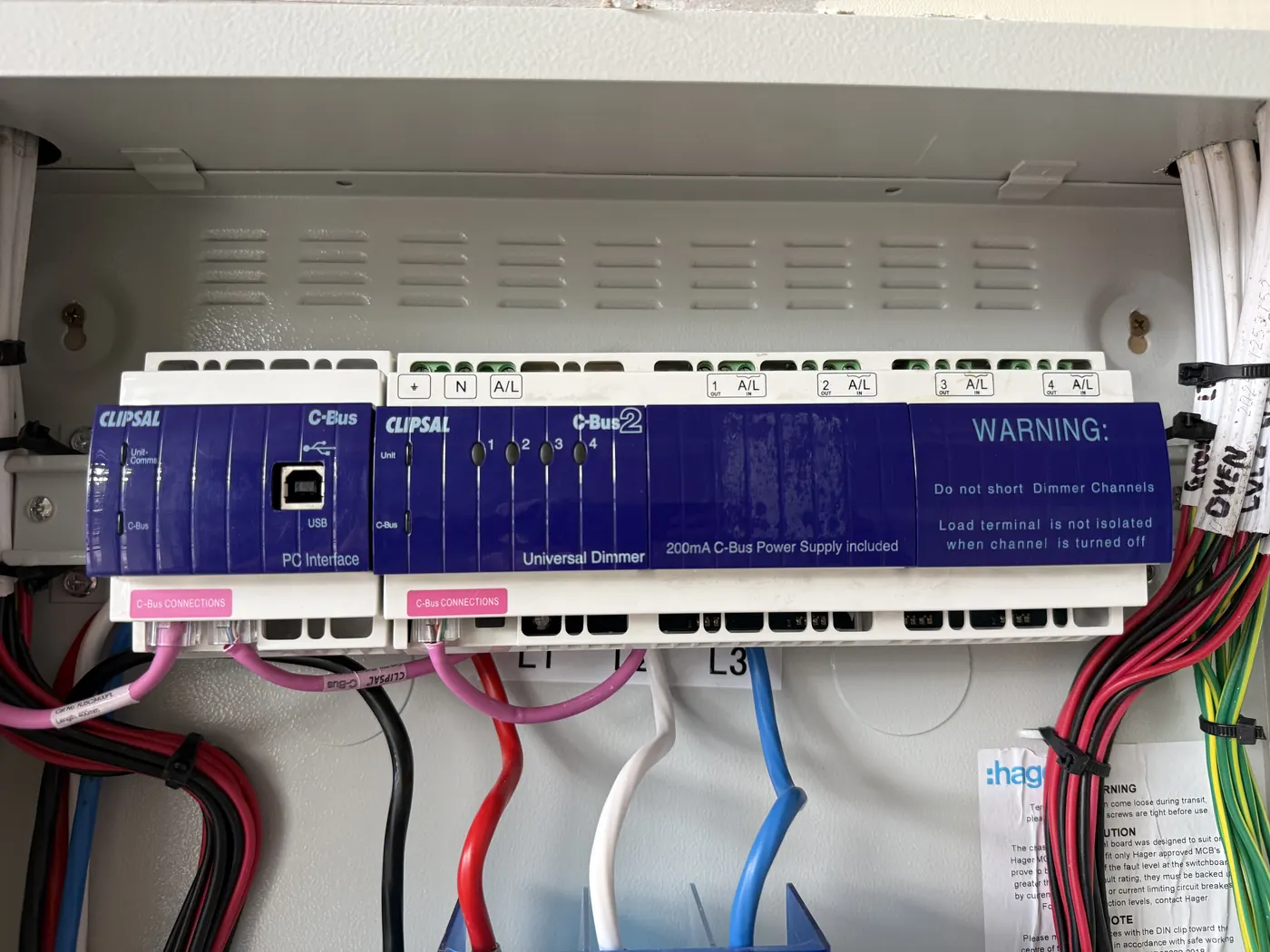
Cync Electrical & Automation was built around Clipsal C-Bus. We’re licensed electricians and we program the system, so the hardware and the software get dealt with in the same visit — fault finding, reprogramming, recovering lost project files, replacing failed modules and keypads, and bridging older systems into Apple Home.
See C-Bus repairs and programming for the detail.
Control panels in use
A wall-mounted touch panel controlling lighting and blinds.
Smart home questions
Why won’t my smart switch fit?
Nearly always there’s no neutral in the switch box. Traditional Australian wiring often loops only the active through the switch and runs the neutral straight to the light, and most smart switches need a neutral to power themselves. Battery switches and relays at the fitting are workarounds — but it needs solving, not ignoring.
Will my smart home still work if the internet goes down?
That depends on what’s installed. Systems with local control carry on; cloud-only ones don’t. We favour local control, because an internet outage shouldn’t stop you turning on a light.
Apple Home or Google Home?
Both work well. Pick the one that matches the phones in your household — that’s the decision that affects daily use. Choosing devices with local control matters more than the platform.
Can you fix my C-Bus system?
Yes — C-Bus is what Cync was built on. We diagnose faults, reprogram scenes and schedules, replace failed hardware and connect older systems to Apple Home. Our C-Bus repairs page has the detail.
Do smart switches work with LED downlights?
Yes, with a matched dimmer or switch. A mismatched pair is the usual cause of flickering and buzzing — the same problem as conventional dimmers on LEDs, with the same fix.
What should I wire in during a renovation?
A neutral at every switch, data cabling to key points, deeper switch boxes, and conduit to the front door, gate and blinds. None of it locks you into a brand, and all of it is hard to add later.
What customers say
The downlights connected to our C-Bus system were flickering. Jason explained the issue in detail, provided a solution and the lights are now working perfectly. Highly recommend — a professional and honest approach delivering excellent work.
Jason was reliable, knowledgeable and communicated the problem in simple terms to understand with patience. Highly recommend his ability to troubleshoot and solve the complicated light issues.
Jason solved a really complex problem for our house with excellent professionalism and workmanship. Highly recommend, would def work with him again. On time delivery and within budget.
These are Google reviews for Cync Electrical & Automation. 5.0 from 20 reviews. — see the profile
Automation work
Planning smart switching or a renovation?
Talk to us before the plaster goes on. Call 0411 498 916.