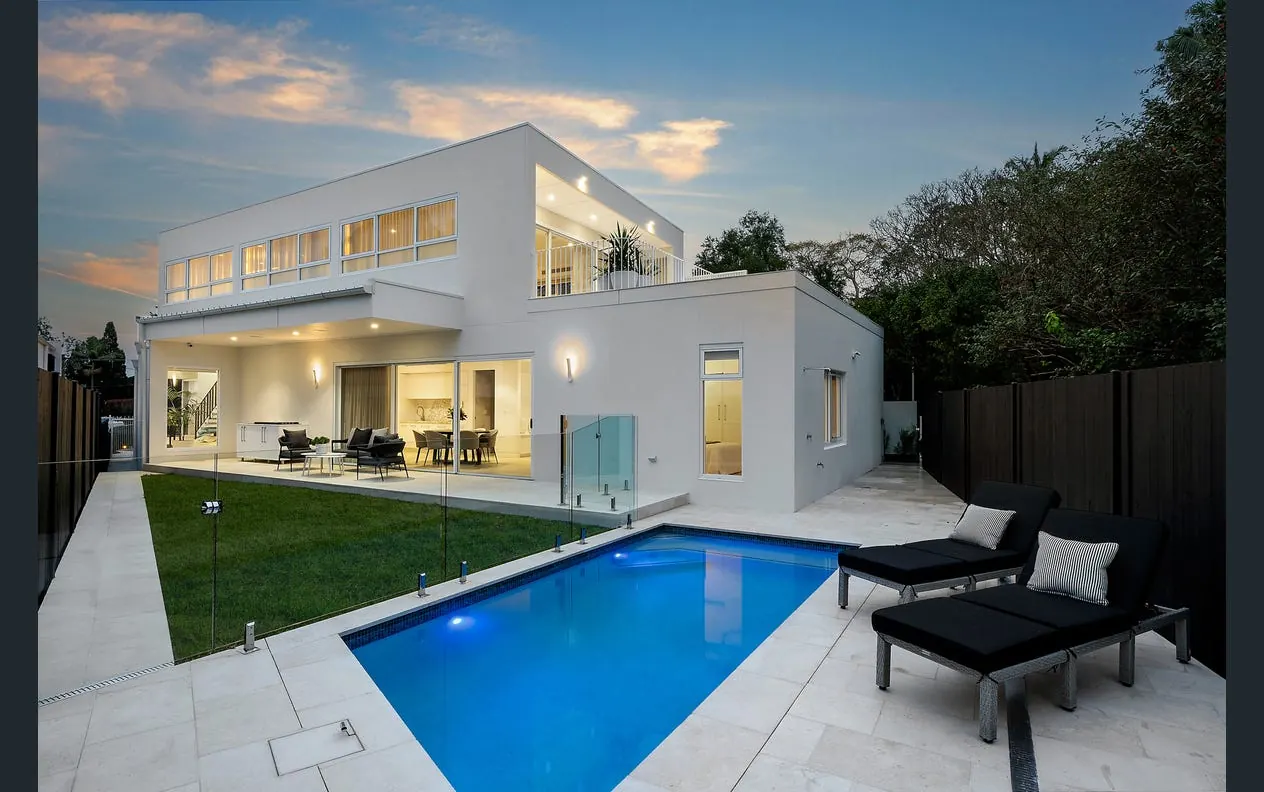
Pool and outdoor electrical work
Pool lights, pump circuits, garden lighting and outdoor power — installed to the rules around water, and built to survive the salt air.
Salt air is the real enemy out here
Anywhere within sight or smell of the ocean or the harbour, outdoor electrical gear ages faster. Salt-laden air settles on everything, draws in moisture, and gets to work on metal: screw terminals, light fittings, transformer housings, the hinges on weatherproof covers. Add a saltwater pool and its chlorinator, and the pump area becomes one of the harshest spots on the property.
What we see most around the Eastern Suburbs is predictable. Garden lights whose fittings have corroded through. Outdoor power points with covers that no longer close, and green corrosion on the terminals behind them. Pool light transformers rusting in a pump enclosure that never dries out. Each one tends to show up first as a safety switch that trips after rain or overnight dew.
Doing it properly here comes down to materials and placement: marine-grade or high-grade stainless and sealed fittings rather than standard outdoor ranges, glands and enclosures suited to the location, equipment kept out of the spray and the splash zone, and sensible drainage. It costs a little more up front and much less over the life of the job. Our guide to salt air corrosion goes into more detail.
Pool light replacement and LED conversion
Old halogen pool lights fail often, use a lot of power for the light they give, and on many older pools the globe can’t be changed without dropping the water level or getting in.
Most can be converted to LED. Modern replacement lights are made to fit the existing niche, last far longer, use a fraction of the power and often add colour options. The part that matters most is on the dry side: pool lighting runs at extra-low voltage through a transformer, and where that transformer sits and how it’s protected is usually where the trouble is. If your pool light circuit trips, look there before looking in the pool.
Why the rules around a pool are stricter
The wiring rules set out defined zones around a pool or spa, with limits on what can be installed in each, how it must be protected, and how far it must be from the water. For a homeowner, that means:
- All pool equipment circuits must be RCD protected. On older installations this is the thing we most often find missing.
- Power points near the pool have minimum distances from the water’s edge and must be correctly rated and protected.
- Pumps, chlorinators and heaters are best on their own circuit rather than sharing with garden lights or a laundry.
- Lighting, speakers and heaters within the zones have specific requirements that a general “outdoor rated” label doesn’t meet.
Pools on tight Eastern Suburbs blocks often have the equipment jammed into a narrow side passage, under a deck or beneath the stairs down to the water. If yours has had pumps, chlorinators and lights replaced one at a time over the years, it’s worth having the whole setup checked rather than assuming it all added up correctly.
What pool electrical work costs
Sydney, 2026.
| The job | Price |
|---|---|
| Pool light replacement, LED retrofit into existing nicheNot including the light itself | $250 – $550 |
| Pool light transformer replacement or relocationWhere it has failed, corroded or sits in a bad spot | $350 – $700 |
| Dedicated pool pump circuitFrom the switchboard, RCD protected | $450 – $950 |
| Pool equipment sub-boardPump, chlorinator, heater and lighting on one local board | $900 – $2,000 |
| Outdoor weatherproof power pointsRated and positioned correctly for the zones | $220 – $400 each |
| Outdoor and landscape lightingPer light, extra-low voltage or mains | from $150 each |
These are indicative market ranges for Sydney in 2026, not a quote. What you pay depends on your switchboard, access and what we find. We confirm a fixed price before starting, and it doesn’t move.
Pool and outdoor questions
Why do my outdoor lights keep failing near the beach?
Salt air. It corrodes terminals and fittings that would last for years further inland. Replacing like for like just restarts the clock — marine-grade fittings and better sealing are what make the difference.
How much does pool light replacement cost?
$250–$550 for an LED retrofit into the existing niche, not including the light itself. If the transformer has also failed or is badly placed, add $350–$700.
Can I convert my halogen pool light to LED?
Usually, yes — modern LED pool lights are designed to fit existing niches. They last far longer, draw much less power and often offer colour. Worth doing when the old globe next fails.
Why does my pool light trip the safety switch?
Most often water getting into the light, or a failing or corroded transformer on the dry side. Don’t keep resetting it — around a pool, an earth leakage fault is exactly what the RCD is there for.
Does my pool pump need its own circuit?
It should. Pumps draw a heavy continuous load with a high starting current. Sharing a circuit with garden lights or outdoor power is a common cause of nuisance tripping and makes faults harder to trace.
Can you add power near the pool for a heater or speakers?
Yes, applying the zone rules properly — minimum distances from the water and specific ratings. That part has to be right, not approximately right.
Our garden lights and pool are run by C-Bus. Can you work on that?
Yes. C-Bus and home automation are our specialty, including outdoor lighting scenes, timers and pool equipment control.
What customers say
Jason solved a really complex problem for our house with excellent professionalism and workmanship. Highly recommend, would def work with him again. On time delivery and within budget.
Fantastic service! Friendly, efficient and well priced. Highly recommend. Thank you for swiftly fixing our switches.
Jason onsite quickly and completed the work on the spot, giving us a good price and was very polite. Would highly recommend.
These are Google reviews for Cync Electrical & Automation. 5.0 from 20 reviews. — see the profile
Pool light out, or something tripping after rain?
Tell us what’s happening and roughly how close you are to the water. Call 0411 498 916.